Talia Williams
One possible topic I will be writing about is my grandmother who had experienced a traumatic event during her young adulthood of a firework explosion. At the age of about seventeen or so, my grandmother watched as one of her best friends at the time, had exploded into bits in pieces right in front of her eyes from a firework malfunction. The PTSD that my grandmother, as well as the other friends that had watched the tragedy, is something that I see as a loss, and is worth being written about. However, I am having trouble on how exactly to relate this tragedy to a social issue.
Another possible topic would also involve my grandmother. My grandmother’s sister had suffered from severe drug abuse and addiction. I can definitely write about this, and connect it to how the US fails to educate the youth on how harmful drug abuse really is. This will be a very touchy and emotional subject for me to share, but it is worth a try!
Lastly, another topic I could write about is about my friend’s parents, who were immigrants coming from Mexico to the states some thirty years ago. Crossing the border is not as easy as you may think. The physical and mental toll that migrating from one place to another can be very challenging. In regards to my friend’s parents, they have faced many hardships while migrating to the United States.I will have to talk more in-depth about their migration story and gather some facts that could possibly relate to a social issue that is occurring in the country as we speak.
Talia Williams
Professor Frost
14 February 2018
Enslavement on the Outskirts of the Earth
In recent discussions of “Bloodchild,” by Octavia Butler, a contentious debate, has been whether the story portrays an act of slavery or symbiosis. Butler herself claims that the story is not about slavery. However, in the story every human family is forced to supply the aliens with at least one son so he can be implanted with the alien eggs, and reproduce. Which seems like slavery, since human males have no say or choice in the matter of whether they would like to participate in the gruesome, painful experience of birth. A critic who has written about this story, Elyse Helford claims, “When aliens control your destiny as fully as the Tlic control the humans, I call that enslavement.” (Helford 8).
My own view is that slavery is an important theme in this story. Though I concede that the humans in the story are getting something from the relationship with the Tlic, I still maintain that they do not have freedom of any sort. For example, “Back when the Tlic saw us as not much more than convenient, big, warm blooded animals, they would pen several of us together, male and female, and feed us only eggs.” (Bloodchild 5). Sound familiar? The treatment of the humans, and how they are perceived by the Tlic, support my thesis that this story is about slavery.
Many Americans assume that this story is about slavery after their first time reading it. One example to support why many people think this, is from something that the protagonist, Gan is told. “Don’t give me one of her looks,” he said. “You’re not her. You’re just her property.” (Bloodchild 11) The sole word, “property,” alone is sufficient evidence that this story actually is about slavery. The humans have no say in whether that would like to be implanted with alien eggs. They are merely forced to do what they are told, and if failed to do so ends in a form of punishment.
I agree with Helford that this is a story of a form of enslavement. “Through Butler’s representation through Gan, the product of this exchange of oppressions, we have the opportunity to examine the process of enthesis in a metaphoric figure of the encultured “slave.” (Helford 7) The story entirely, as any other has multiple themes. Many can perceive this story as either a form of enslavement or symbiosis. Like Helford, I agree that the way of the exchange of oppression, is indeed a metamorphic figure of slavery.
In short, I think that this story is about slavery. Some might object that this story is about slavery. I would reply that there is no right or wrong answer here, and that we are all individually entitled to our own opinion. The issue in which the debate whether this story i about symbiosis or slavery is important because this story evokes many underlying emotions, and is a very symbolic story.
Work Cited
Butler, Octavia. Bloodchild and Other Stories. Seven Stories Press, 1995.
Helford, Elyse Rae. "Would You Really Rather Die than Bear My Young?" : The Construction of Gender, Race and Species in Octavia E. Butler's 'Bloodchild.' African American Review, vol. 28, no.2, 1994, pp.259-271.
May you all enjoy
Interview Q&A
This interview is about my grandmother's sister (Jenny), a woman whom I have never met due to the abuse of drugs.
Q: At what age did Jenny start to abuse drugs?
A: !4 years old
Q: How long did her addiction take place for?
A: 20 years
Q: When you found out she was using, did you go to anyone for help?
A: No, at the time I was too afraid of her getting into trouble. She promised me she would stop using. But she continued. I was too young really to understand exactly why she was acting the way she was. I thought it was just a teenage stage, but unfortunately I was wrong.
Q: Did Jenny acknowledge that she had an issue?
A: No. Back then being addicted to coke and heroin became normal for many people. Her friends were the ones that got her into drugs to begin with. She never thought she would get addicted.
Q: Did you or Jenny seek to get professional help?
A: No, the thought never crossed our minds. Back then, we didn't know that you can't just stop using. We had no idea her body would go through withdrawals. She got scared, I got scared. We'd thought this would pass and just wait out her addiction. The more that time passed, the more drugs she tampered with.
Q: Do you regret this situation?
A: Absolutely. Looking back now, I would have done everything differently. I would have got her help, real help. I shouldn't have taken her word when she said she would stop using. I would have led her away from her "friends." I would have tried harder.
Q: Do you think that in today's society
the education on drug abuse is focused on enough?
A: No at all. If people actually knew the full extent of the harmful effects, I highly doubt people would use them to begin with. Many people don't know that after you use for the first time, your body craves drugs more and more. You become useless, and your body only begins to react when you are given drugs. Without drugs there is no possible way for you to feel whole. There needs to be more educational programs on drug abuse in general. Maybe my sister would have still been here today.
Statistics on Drug Abuse
-According to the American Addiction Center Organization of America, drug addiction on average is 50% hereditary. Abusing drugs or alcohol before the brain is fully developed, anytime before a person’s mid twenties increases the risk of addiction later in life. When a person’s brain is underdeveloped and they begin to use drugs, their body becomes covet to the substances in their body. One out of every twelve teenagers under the age of 18 in the United States are substance abusers. People who have ventured marijuana and alcohol before the age of 15, are 4 times more likely to suffer from an abuse disorder and/or addiction, than those of the age of 18. In other words, any a person under the age of 18 who has tried marijuana and/or alcohol are four times more likely to have a substance abuse disorder as they age. The younger an individual begins using drugs or alcohol causes a higher rate of the chance of addiction in their future to come.
According to Jennifer Robison, a contributing editor of the, “Decades of Drug Use,” the, “scare tactics of the 1960’s gave way to the contradictory messages of the late 70’s and early 80’s. Drugs became glamorous, without becoming better understood.” Jenny, (the person I am writing my essay about), began to abuse drugs in the late 60’s early 70’s. And from the information Ms.Robinson has provided us with, it would make sense why Jenny began the use of drugs so freely; drugs were seen as “glamorous,” and like clothing, were in style. “In 2013, there were 19.8 million current users—about 7.5 percent of people aged 12 or older—up from 14.5 million (5.8 percent) in 2007,” according to the National Institute on Drug Abuse (NIDA). With just this little piece of information showing the rapid incline of substance users in such a short period of time, tells me that the incline of drug abuse since the 1970’s is much higher than I had anticipated.
P4: Profile Bibliography
Hopkins, Ellen. Crank. Simon and Schuster, 2004.
This book is based off of a teenage drug addict told in her mother's point of view. Very relateable and intriguing being that the story is told from a parents perspective.Knopf, Alison. "In Case You Haven’t Heard."
“www.alcoholismdrugabuseweekly.com." John Wiley & Sons. February 8, 2018. San Francisco, CA.
-This source is very useful for my research process. This article is based on research of NIH scientists about the pain that opioid addicts feel. I encountered this research throgh this short article on alcoholism and drug abuse weekly, which describes itself as a "news for policy and program decision-makers."
Robinson,Jennifer. "Decades of Drug Use:Data from The 60’s and 70’s." www.news.gallup.com/poll/6331/decades-drug-use-data-from-60’s-70’s.apx.2018. Gallup, Inc. July 2, 2002.
-This cite provides a timeline of drug abuse throughout the decades. Jenny began using throughout the 70's, which became a drug spree for Americans.
Madrask, Bertha." Update of Cannabis and its medical use."
“www.who.int/medicines/access/controlled-substances/62cannabis_update.pdf.” Alcohol and Drug Abuse Research Program. Spring Oaks, California.
-This cite ison cannibas (weed), and how it is a gateway drug creating long term drug abusers.
Morrison I.L., Robert. Overview of State Legislation to Increase Access to Treatment for Opioid Overdose. “nasadad.org/up-content/uploads/2015/09/opioids-Overdose-Policy-Brief-2015-update-FINAL1.pdf. September 2015.
-The opioid epidemic that we are still facing today is a major controversial issue. This is the drug Jenny was given to by her doctor to kill the pain.
NIDA. "Drugs,Brains, and Behavior:The Science of Addiction." “http://www.drugabuse.gov/publications/drugs-brains-behavior-science-addiction.” July 1, 2014.
This website on the science behind drug abusers is quite effective. It lets a person like me, on the other side of the story in on the behavioral aspect of addicts.“Addiction is Not a Disease- And We’re Treating Addicts Incorrectly.” New York Post. August 5, 2016.
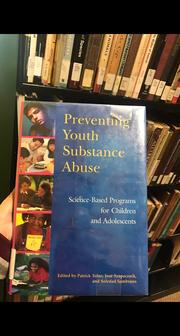
This site is useful due to the fact of its major relevance to my story. Jenny was also prescribed pain killers by her doctors which started her spree on drugs. Tolan, Patrick. Preventing Youth Substance Abuse. American Psychological Association. August 30, 2006.
This book is about the prevention of youth drug abuse. This could have been effective if Jenny had read this and understood the harmful effects of youths abusing drugs.
P5
Life before the drugs
A. The family dynamic
B.Genetics of the family; how it ties into Jenny’s eventual addiction
C. Relationships between family and friends
II. During drugs
A. Why did Jenny begin using?
B. What drug was she given wrongfully by her doctor for an injury/why?
C.Was anyone aware of her addiction?
III. History of drug abuse throughout the decades
A. What drug was Jenny using / what drugs were popular in the 70’s and 80’s.
B. How the era of the 60’s and 70’s enabled Jenny to begin abusing drugs.
C. The awareness of drugs given at the time; the low effectiveness of it as well.
III. Social Issues; how does Jenny’s addiction relate to problems many Americans face today?
A. Drug awareness mechanisms back in the 60’s and 70’s.
B. How effective was America’s approach on tackling drug addiction?
C. How to advance drug awareness to children in the US today.
IV. Post Drugs
A. The events leading up to Jenny’s overdose, ( resulting in her death.)
B. Did Jenny’s death send a message in regards to the family member and friends also abusing drugs?
C. What would the family have done differently if they could?
Profile Essay - Jenny's Story
My grandmother grew up with seven brothers and sisters, which one of whom I have never met before. Her name was Jenny. My profile essay will explore Jenny's life, before and during her drug abuse addiction. Life became almost impossible to live without using. This is her story.
Growing up, Jenny was the typical obedient, home by curfew daughter born and raised in Jersey City in the 1960’s. The classic Catholic Italian schoolgirl, with her long stockings and vibrant rich dark locks that would dangle over her shoulder when she would walk. Those big blue eyes that made everyone stare at her as she would strut down the hallway; even the nuns. She listened, never went against any elders word of instruction, and practiced catholicism quite strictly. At the time, Jenny had taken the way she carried herself and her schoolwork , more importantly than her other sisters. But this behavior did not last very long.
Jenny's father lost his job as a car salesmen so all the kids had to switch to public school. Since he was the sole provider of the family, this hit home hard.academic wise. No more high stockings, no more skirts and bows in their hair, no more nuns screaming in their faces and hitting them with a wooden ruler. No more reciting verses from the bible, no more discipline; which also meant, very few rules. Yes of course, there are rules in every school, but being that all my grandmother’s siblings previously attended Catholic school, going to public school was like a piece of cake for them.
Jenny was, for the most part, forced to have all girl friends from school her entire life. That was all she knew. However, public school was different, very different. Remember that this is taking place in the 1960’s. Teenagers smoking cigarettes in the bathrooms was absolutely acceptable. Smoking a pack or two each day never hurt anyone, (as they thought) . Although, Jenny had never been exposed to such behavior. So when she was, it took a turn for the worse.
At first, Jenny was exposed to marijuana. Her classmates would roll up joints in the back of the classroom, get high, and inhale and exhale through the nearest window. Drug abuse was at an all time high in this era. LSD, also known as acid, was at the top of the chart. Jenny’s first acid experience as she explained to my grandma was more of an enlightening experience that a negative one as one would assume. Drugs made her happy. It made Jenny on top of the world 24/7. She felt untouchable, unbreakable. The problems that her family was facing financially suddenly faded once she entered this new world she swore she was destined to belong in; the world of drugs.
In such a short period of time, Jenny had become dependent on being on a constant high. School and occasionally working wouldn’t cut it for Jenny any longer. Instead of asking, “which pages do we have to read for English class,” Jenny was asking things like, “what’s a drug that I can try next?” Her addiction became real, but with her gorgeous appearance and colorful personality, it was hard for most people to tell if there was something wrong. Well, in the beginning that would hold her off of everyone’s radar for a while. Until one particular day that changed it all.
In the spring of 62’, my great grandmother Marie had just come home from grocery shopping. She had left the door to her room unlocked, because she figured that all of the kids were at school, and she would spend the day to relax and enjoy her afternoon. Little did she know that she was in for a surprise. Marie opened her bedroom door, layed carelessly on her bed, then quickly got up and realized that it was time for her to take her medication. She got up, went into her medicine drawer, and discovered that there were no pill capsule left in the container, and it was completely empty. 16 pills vanished. Where did all my pills go she thought? There was a ring at the door; it was my grandmother crying, pacing back and forth before her mothers eyes. “What is it Robyn? What is the matter, aren’t you supposed to be at school?”, she asked. My grandmother looking up at her unsure of her reaction, finally found the courage to come up with the words she was longing to say, but just couldn’t seem to get them out. “It’s Jenny,” my grandmother said. “She’s in the hospital, she overdosed on Xanax.” My great grandmothers face fell blank, with an immense look of worry and darkness in her eyes. In that moment she knew her daughter had taken her pills.
Rushing, speeding through traffic lights, this was something my grandmother had never seen her mom act like before. The gruesome, horrid energy that surrounded them two was unbearable to ignore. They had no idea what they were about to walk into. Marie parks the car, and they both storm into the hospital. My grandmother explained how they discovered Jenny just how it looks in the movies. Snatching back every patient’s curtain, to try and find her sister’s face looking up at her. “Where are you Jen,” she kept thinking to herself. One more swift curtain back, until she would hit the wall, and there Jenny was; with an IV in her arm appearing pale and lifeless. She looked as if she were severely hungover, in pain, not knowing which part of her body would hurt the most in the next upcoming hours. When Marie saw her daughter in such a low state of mind, there was not much dialogue. She had already figured out that her daughter was just another drug addict, who would be the talk of the town wherever she would go. Whispers in salons, supermarkets, board meetings at school. My great grandmother knew this would not be in secret; the entire community was bound to find out that her Catholic straight A student of a daughter, was not who they thought she ought to be; she was the opposite of who she was raised to become- and now she is just a junkie.
My grandmother’s sister Jenny, was about 14 or 15 years of age when drugs became a part of her daily life. It wasn’t until she was roughly about 18 or 19 years old when her addiction became noticeable. What previously was perceived as this innocent, well minded girl, had suddenly become frail and limplike. Her hair had began to recede and lose its rich dark color. The bone structure in Jenny’s face became quite prominent. In this short period of time, it appeared as if Jenny had aged about 20 years.
My grandmother started to notice a change in her sister’s moods when she attempted sobriety. Each time Jenny failed, and with every failed attempt, came another drug. My grandmother knew about her drug addiction problem, long before their parents could figure it out for themselves. Jenny had to be about 19 when her addiction became severe. Staying out late nights, not showing up to school, physically and mentally falling behind.
According to the American Addiction Association any person who has tried marijuana before the age of 15 are four times more likely to have a substance abuse disorder in their upcoming years. Marijuana as many may know, is a gateway drug, and results in users moving up the scale of drugs in order to get a more high. Jenny began smoking weed at about the age of 13. At the time, being in the late 60’s, early 70’s, this was completely acceptable. It was almost abnormal when teenagers did not have a cigarette in their mouth. But marijuana was a high that Jenny no longer desired. She moved onto bigger, more destructive drugs in order to supply her needs. Drugs became her backbone. Almost as equivalent to someone struggling for their life on life support. She needed drugs to survive. Without the proper help that she desperately needed, she was rapidly slipping through this beautiful thing that we call life. She was ending her life a little bit more, each and every day.
Socially, these issues need to be addressed in today's society. The topic of drug abuse is kind of just pushed under the rug and not really talked about. People have the right to know how harmful drugs really are. To my surprise, I also learned that opioid users are at an all time high now. No one speaks on these topics, nor emphasizes its importance to society. To protect our loved ones, we must start by educating them as children before it is too late and the damage is already done.
Jenny deserved to live a longer life. To pass away at 33 years old from any illness is quite severe. Without the knowledge of what drugs are actually capable of, Jenny's life was taken very soon. We, living in the now, must spread the word to our classmates, to our sisters and brothers, as well as all of those around us to wake up and realize that drugs are very harmful. We must fight this battle as a whole. Conquering drug abuse will not be easy; but in the long run, it will be worth it.
Works Cited
Robinson,Jennifer. "Decades of Drug Use:Data from The 60’s and 70’s." www.news.gallup.com/poll/6331/decades-drug-use-data-from-60’s-70’s.apx.2018. Gallup, Inc. July 2, 2002.
Madrask, Bertha." Update of Cannabis and its medical use."
“www.who.int/medicines/access/controlled-substances/62cannabis_update.pdf.” Alcohol and Drug Abuse Research Program. Spring Oaks, California.
Morrison I.L., Robert. Overview of State Legislation to Increase Access to Treatment for Opioid Overdose. “nasadad.org/up-content/uploads/2015/09/opioids-Overdose-Policy-Brief-2015-update-FINAL1.pdf. September 2015.
NIDA. "Drugs,Brains, and Behavior:The Science of Addiction." “http://www.drugabuse.gov/publications/drugs-brains-behavior-science-addiction.” July 1, 2014.
“Addiction is Not a Disease- And We’re Treating Addicts Incorrectly.” New York Post. August 5, 2016.
The Handmaid's Tale N1
The Handmaid's Tale N1
Talia Williams
Professor Frost
Imagine a government that takes away your freedom, and controls all of your actions. The Republic of Gilead’s government was determined to have a society identical to this idea. In, The Handmaid’s Tale, by Margaret Atwood, the government takes away freedom from all women in society by viewing them as an object only to be used for reproduction purposes, dehumanizing them, and taking control of their sexuality. The government only gives proper freedom to the men in society, by overpowering them and implanting patriarchal ideology. The novel has the effect of making one seem less important by highlighting how miserable and humiliated the handmaid’s were throughout the reading. The novel basically shows how horrible this society is, and foreshadow for the United States to come to this reality one day. With the numerous echoes and
This novel may have been written in the 80’s, although provides many hints and clues that the society Americans face today, can equal such ideas as the Republic of Gilead. The Republic of Gilead is the product of pollution and radioactive waste, which is why men and women can barely produce children. Now, children are the future, and women and the ones that give birth to them; and as all human nature is aware knows, men are the ones who impregnate life into the woman ( hence why they begin taking advantage of women to get what they want). The narrator, Offred, is a handmaid, whose duty in the novel is to produce children with who she is assigned to. Offred gets assigned to the Commander, where they have to have sexual intercourse and hopefully she ends up pregnant and can somehow give this newfound society what it’s looking for.
A handmaid’s job is to regard normal civilization as they once knew, and obey the new and “improved” rules of this patriarchal society. Unfortunately, women are not allowed to read literature, go wherever they please, talk to whomever they are fond of talking to, or in other words, live the life they used to. For example, Offred a couple years back before this new war torn society came about, lived a subpar normal life with her one daughter, and husband Luke. After the war, Offred lost her daughter to the government, and was forced to perform sexual acts with randomly assigned men whom she never met before to expectantly produce offspring with. Although, the narrator is one tough cookie, and does not go down without a fight. Towards the end of the novel with all of these horrendous “duties” and living a life that was a nevertheless despondent inhumane lifestyle, Offred decided to make a run for it. Although the book lacks a certain happy ending, I have faith that Offred fled to create a beautiful life for herself elsewhere.
The recent uproar of this novel , and its obvious foreshadow of our society to be, blew up in the media around April of 2017, when Hulu premiered the show based on this book, The Handmaid’s Tale. The show and the novel has similarities, as well as differences; however the main focus of this paper is the literature side of Atwood’s success. A book review of The Handmaid’s Tale, by Francine Quaglio addresses all of the underlying message that Atwood so desperately is warning Americans about. Quaglio claims that this novel should be a wake up call to what may someday be our reality. Quaglio states, “ Atwood’s text is a tale of the future, to be sure, but it is a familiar future. A women’s culture, controlled by men; a women’s culture structured according to those traditional values so revered in our public discourse. What if? What if a certain Christian vision became the American Way?” This quote by far, holds one of the most moving and powerful sayings that is quite topical in the world that we live in today. If you really were to think about it, the things that are going on in this novel have already been occurring for years in other countries. Countries such as Afghanistan, Iraq, Syria, and many other Middle Eastern countries, ( yes there are many other countries that obtain a patriarchal society), have based their male dominance due to the “rightful duties” of religion.
Quaglio’s book review supports all of Atwood’s ideas of foreshadowing the future of the United States. In which, I too agree as well. If you really are to look around you, the place that you live on called Earth, as much as things are as bright and daisy as can be, so are the awful, terrible things Americans are not properly informed about that is happening all around them. Americans tend to only know what is going on around them, where they live, but not the world that they live in. Majority of Americans are probably not even familiar with their own country’s wrongdoings to others and even minute things like new laws being passed. Americans live in such a personal selfish bubble, that sometimes can result in their lack of knowledge of alarming events that happen everyday around the globe. And like Offred, who probably never opened up a newspaper, or turned on the channel of the news, was completely taken off guard when her world was turned upside down.
One quite vital piece of information that Americans should live by is from this book review by Francine Quaglio. “ As all historians know, the past is a great darkness and filled with echoes. So is the present. Read the newspapers, read Atwood’s text and listen for the echoes.” In other words, Quaglio is only reassuring Atwood’s text in terms of a very possible and nearby reality that we can face, if we do not look out for one another, and educate ourselves about the events taking place around the world. For your entire life, maybe now more than ever, you have probably touched on the subject of the pollution epidemic in America. But that’s just another problem that you think you’ll outlive to see the repercussions right? That is yet another perfect example of what both Atwood and Quaglio so desperately trying to educate their readers about. In order to avoid such patriarchal dominance, society as a whole must be aware that if we keep up the hazardous things that we are contributing to this environment up, Atwood’s text is exactly where we are heading.
Works Cited
Atwood, Margaret Eleanor. The Handmaid's Tale. New York. Anchor Books 1998, c1986. Print.
Quaglio, Francine. 1998. Book Review: The Handmaid's Tale. Bridgewater Review, 6 (1), 29. http://vc.bridgew.edu/br_rev/vol6/iss1/13
Talia Williams
Profile Essay - Jenny's Story
My grandmother Robyn grew up with seven brothers and sisters, one of whom I have never met. Her name was Jenny. Robyn is someone I hold very dearly to my heart, who informed me about the events take took part in Jenny’s lifetime of suffering from drug addiction. Life became almost impossible to live without abusing drugs. This is Jenny’s story.
Growing up, Jenny was the typical obedient daughter, always home-by-curfew, born and raised in Jersey City in the 1960’s. The classic Catholic Italian schoolgirl, with her long stockings and vibrant rich dark locks that would dangle over her shoulder when she would walk. Those big blue eyes that made everyone stare at her as she would strut down the hallway; even the nuns. She listened, never went against any elders word of instruction, and practiced Catholicism quite strictly. At the time, Jenny had taken her schoolwork more seriously than her other sisters. But this behavior did not last very long.
Jenny's father lost his job as a car salesman,and since he was the sole provider of the family, all of the kids had to switch from Catholic school to public school. No more high stockings, no more skirts and bows in their hair, no more nuns screaming in their faces and hitting them with a wooden ruler. No more reciting verses from the bible, no more insane actions of discipline; which also meant, very few rules. Yes of course, there are rules in every school, but since all my grandmother’s siblings previously attended Catholic school, going to public school, as Jenny had imagined, would not be as challenging.
Jenny was, for the most part, forced to have all girl friends from school her entire life. That was all she knew. However, public school was different, very different. Remember that this is taking place in the 1960’s. Teenagers smoking cigarettes in the bathrooms was absolutely acceptable. Smoking a pack or two each day never hurt anyone- or so they thought. However, Jenny had never been exposed to such behavior. So when she was, it took a turn for the worse.
At first, Jenny was exposed to marijuana. Her classmates would roll up joints in the back of the classroom, get high, and inhale and exhale through the nearest window. Drug abuse was at an all time high in this era. LSD, also known as acid, was at the top of the chart. Jenny’s first acid experience as she explained to my grandma was more of an enlightening experience than a negative one. Drugs made her happy. It made Jenny on top of the world 24/7. She felt untouchable, unbreakable. The problems that her family was facing financially suddenly faded once she entered this new world she swore she was destined to belong in; the world of drugs.
In such a short period of time, Jenny had become dependent on being on a constant high. School and occasionally working wouldn’t cut it for Jenny any longer. Instead of asking, “which pages do we have to read for English class,” Jenny was asking things like, “what’s a drug that I can try next?” Her addiction became real, but with her gorgeous appearance and colorful personality, it was hard for most people to tell if there was something wrong. Well, in the beginning that would hold her off of everyone’s radar for a while. Until one particular day that changed it all.
In the spring of 62’, my great grandmother Marie had just come home from grocery shopping. She had left the door to her room unlocked, because she figured that all of the kids were at school, and she would relax and spend the day at home. Little did she know that she was in for a surprise. Marie opened her bedroom door and laid carelessly on her bed, then quickly got up and realized that it was time for her to take her medication. She got up, went into her medicine drawer, and discovered that there were no pill capsule left in the container, and it was completely empty. 16 pills vanished. Where did all my pills go she thought? There was a ring at the door; it was my grandmother crying, pacing back and forth before her mothers eyes. “What is it Robyn? What is the matter, aren’t you supposed to be at school?”, she asked. Marie looking up at her unsure of her reaction, finally found the courage to come up with the words she was longing to say, but just couldn’t seem to get them out. “It’s Jenny,” Marie said. “She’s in the hospital, she overdosed on Xanax.” Marie’s face fell blank, with an immense look of worry and darkness in her eyes. In that moment she knew her daughter had taken her pills.
Rushing, speeding through traffic lights, this was something my grandmother had never seen her mom act like before. The gruesome, horrid energy that surrounded them two was unbearable to ignore. They had no idea what they were about to walk into. Marie parks the car, and they both storm into the hospital. Robyn explained how they discovered Jenny just how it looks in the movies. Snatching back every patient’s curtain, to try and find her sister’s face looking up at her. “Where are you Jen,” she kept thinking to herself. One more swift curtain back, until she would hit the wall, and there Jenny was; with an IV in her arm appearing pale and lifeless. She looked as if she were severely hungover, in pain, not knowing which part of her body would hurt the most in the next upcoming hours. When Marie saw her daughter in such a low state of mind, there was not much dialogue. She had already figured out that her daughter was just another drug addict, who would be the talk of the town wherever she would go. Whispers in salons, supermarkets, board meetings at school. Marie knew this would not be in secret; the entire community was bound to find out that her Catholic straight A student of a daughter, was not who they thought she ought to be; she was the opposite of who she was raised to become- and now she is just a junkie.
My grandmother’s sister Jenny was about 14 or 15 years of age when drugs became a part of her daily life. It wasn’t until she was roughly about 18 or 19 years old when her addiction became noticeable. What previously was perceived as this innocent, well minded girl, had suddenly become frail and limplike. Her hair had began to recede and lose its rich dark color. The bone structure in Jenny’s face became quite prominent. In this short period of time, it appeared as if Jenny had aged about 20 years.
My grandmother started to notice a change in her sister’s moods when she attempted sobriety. Each time Jenny failed, and with every failed attempt, came another drug. My grandmother knew about her drug addiction problem, long before their parents could figure it out for themselves. Jenny had to be about 19 when her addiction became severe. Staying out late nights, not showing up to school, physically and mentally falling behind.
According to the National Institute of Drug Abuse (NIDA), “Not only did the volume of opioid prescribed increase, but well-intentioned healthcare provider began to prescribe opiods to treat pain in ways that we now know are high risk and have been associated with opioid abuse,addiction, and overdose, such as prescribing at high doses and for longer durations.” (Dr. Francis Collins). When Jenny had first overdosed in the 60’s, her doctor at the time had thought that it would be a good idea to prescribe her opioids, to help with the physical pain she was feeling on her right leg when collapsed to the ground after the pills had overcome her body. At the time, doctors did not know things about the hazardous effects about prescribing opioids as they do now. A minor injury- (as we know now), does not involve the prescription of opioids to prevent any pain a patient is experiencing. As time had progressed and Jenny was out of opioids, she began to experiment with other drugs such as the infamous psychedelic drug commonly known as “shrooms.” Jenny moved onto bigger, more destructive drugs in order to supply her needs. Drugs became her backbone, almost as equivalent to someone struggling to stay alive on life support. She needed drugs to survive. Without the proper help that she desperately needed, she was rapidly slipping through this beautiful thing that we call life. She was ending her life a little bit more, each and every day.
Many people do not know that taking drugs at early age can lead to addiction and serious health issues. According to the NIDA, “research shows that the earlier a person begins to use drugs, the more likely he or she is to develop serious problems. This may reflect the harmful effect that drugs can have on the developing brain.” (Drs.N Volkow and H.Schelbert.) Now, Jenny began using drugs at the age of 14. At this age, the brain is nowhere near fully-developed, and using drugs causes the brain harm, and creates a lifetime of serious mental health issues. If Jenny did not begin at the age in which she did, or did not use drugs at all, i have faith that she still would have been here today.
Socially, these issues need to be addressed in today's society. The topic of drug abuse is kind of just pushed under the rug and not really talked about. People have the right to know how harmful drugs really are. To my surprise, I also learned that opioid users are at an all time high now. No one speaks on these topics, nor emphasizes its importance to society. To protect our loved ones, we must start by educating them as children before it is too late and the damage is already done. Back in the 60’s and 70’s, drugs became a lifestyle, a normality for young teens and adults. The way children today use phones, is in the same contrast of how people back then used drugs- (not a day without it). There was no form of proper education that enforced the harmful effects of drugs. Many people just had to find it out for themselves, which in the end did not turn out well for most.
Knowing what we know now about drugs and what it can do the brain, ideas such as drug awareness programs nationwide, as well as in school lectures need to be put into play. It may have been 50 years since the 60’s, although Americans are still unaware of the opioid and drug epidemic taking place in their own towns and the country. Drug awareness is not enforced in our schools which is a big part of why children do drugs to begin with- (they may not know any better). Those who argue that taking drugs is a choice, and are only used from bad and misbehaved families is completely false. Take Jenny’s life for example. The perfect homelife, scholar, and what seemed to be ideal life came to the result of passing away from a drug overdose.
Jenny deserved to live a longer life. To pass away at 33 years old from any illness is quite severe. Without the knowledge of what drugs are actually capable of, Jenny's life was taken very soon. We, living in the now, must spread the word to our classmates, to our sisters and brothers, as well as all of those around us to wake up and realize that drugs are very harmful. We must fight this battle as a whole. Conquering drug abuse will not be easy; but in the long run, it will be worth it.
“Works Cited”
NIDA. "Drugs,Brains, and Behavior:The Science of Addiction." “http://www.drugabuse.gov/publications/drugs-brains-behavior-science-addiction.” July 1, 2014.
https://www.drugabuse.gov/about-nida/legislative-activities/testimony-to-congress/2017/federal-response-to-opioid-crisis
Talia Williams
Corey Frost
Enslavement on the Outskirts of the Earth
In recent discussions of “Bloodchild,” by Octavia Butler, a contentious debate, has been whether the story portrays an act of slavery or symbiosis. Butler herself claims that the story is not about slavery. However, in the story every human family is forced to supply the aliens with at least one son so he can be implanted with the alien eggs, and reproduce. Which seems like slavery, since human males have no say or choice in the matter of whether they would like to participate in the gruesome, painful experience of birth. A critic who has written about this story, Elyse Helford claims, “When aliens control your destiny as fully as the Tlic control the humans, I call that enslavement.” (Helford 8).
My own view is that slavery is an important theme in this story. Though I concede that the humans in the story are getting something from the relationship with the Tlic, I still maintain that they do not have freedom of any sort. For example, “Back when the Tlic saw us as not much more than convenient, big, warm blooded animals, they would pen several of us together, male and female, and feed us only eggs.” (Bloodchild 5). Sound familiar? The treatment of the humans, and how they are perceived by the Tlic, support my thesis that this story is about slavery.
Many Americans assume that this story is about slavery after their first time reading it. One example to support why many people think this, is from something that the protagonist, Gan is told. “Don’t give me one of her looks,” he said. “You’re not her. You’re just her property.” (Bloodchild 11) The sole word, “property,” alone is sufficient evidence that this story actually is about slavery. The humans have no say in whether that would like to be implanted with alien eggs. They are merely forced to do what they are told, and if failed to do so ends in a form of punishment.
I agree with Helford that this is a story of a form of enslavement. “Through Butler’s representation through Gan, the product of this exchange of oppressions, we have the opportunity to examine the process of enthesis in a metaphoric figure of the encultured “slave.” (Helford 7) The story entirely, as any other has multiple themes. Many can perceive this story as either a form of enslavement or symbiosis. Like Helford, I agree that the way of the exchange of oppression, is indeed a metamorphic figure of slavery.
In short, I think that this story is about slavery. Some might object that this story is about slavery. I would reply that there is no right or wrong answer here, and that we are all individually entitled to our own opinion. The issue in which the debate whether this story i about symbiosis or slavery is important because this story evokes many underlying emotions, and is a very symbolic story.
“Works Cited”
Butler, Octavia. Bloodchild and Other Stories. Seven Stories Press, 1995.
Helford, Elyse Rae. "Would You Really Rather Die than Bear My Young?" : The Construction of Gender, Race and Species in Octavia E. Butler's 'Bloodchild.' African American Review, vol. 28, no.2, 1994, pp.259-271.
Talia Williams
Profile Essay - Jenny's Story
My grandmother Robyn grew up with seven brothers and sisters, one of whom I have never met. Her name was Jenny. Robyn is someone I hold very dearly to my heart, who informed me about the events take took part in Jenny’s lifetime of suffering from drug addiction. Life became almost impossible to live without abusing drugs. This is Jenny’s story.
Growing up, Jenny was the typical obedient daughter, always home-by-curfew, born and raised in Jersey City in the 1960’s. The classic Catholic Italian schoolgirl, with her long stockings and vibrant rich dark locks that would dangle over her shoulder when she would walk. Those big blue eyes that made everyone stare at her as she would strut down the hallway; even the nuns. She listened, never went against any elders word of instruction, and practiced Catholicism quite strictly. At the time, Jenny had taken her schoolwork more seriously than her other sisters. But this behavior did not last very long.
Jenny's father lost his job as a car salesman,and since he was the sole provider of the family, all of the kids had to switch from Catholic school to public school. No more high stockings, no more skirts and bows in their hair, no more nuns screaming in their faces and hitting them with a wooden ruler. No more reciting verses from the bible, no more insane actions of discipline; which also meant, very few rules. Yes of course, there are rules in every school, but since all my grandmother’s siblings previously attended Catholic school, going to public school, as Jenny had imagined, would not be as challenging.
Jenny was, for the most part, forced to have all girl friends from school her entire life. That was all she knew. However, public school was different, very different. Remember that this is taking plac